


May the Lie Lose Its Shelter

In the dark, I say the sentence I’ve spent all day improving. “I want what they did to cost them.”
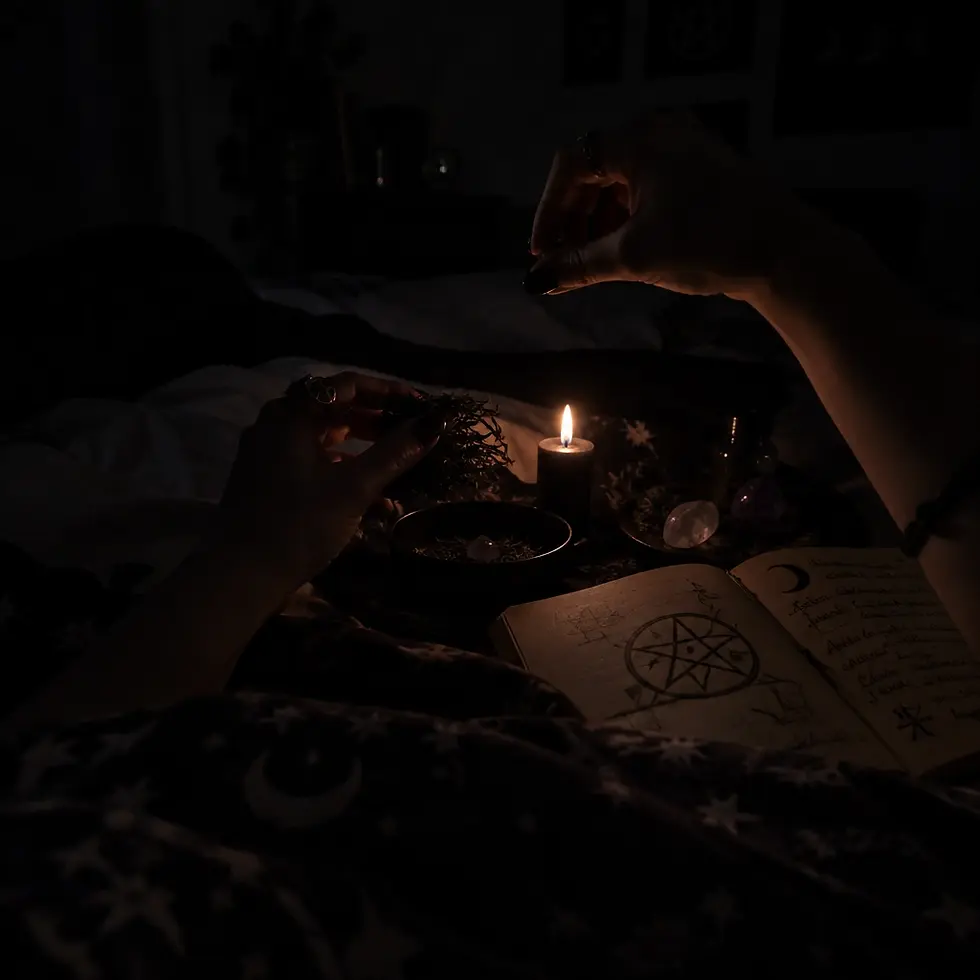
The room is cold enough that I can feel it through my socks. I’ve set a black bowl upside down on the table. Under it is a piece of paper with a sentence on it. There’s a second sheet beside the bowl, and I’ve left that one blank. I know what I want to write. I’m taking a moment because once I put it down, I’ll have to decide whether I mean every word.
There’s a kind of anger I can carry all day without anyone noticing. I can answer an email, ask how somebody’s weekend went, and pick up milk on the way home. Then I’ll find myself standing in the kitchen, milk still in my hand, rehearsing a conversation with somebody who sleeps just fine. By the time I sit down to work a curse, I may have spent hours keeping my voice pleasant for people who can afford to misunderstand me. I have no further use for a pleasant voice that night.
I call myself a Hawaiian interfaith witch doctor. In my own practice, I use dark witchcraft to give certain things a room of their own. Grief can come in. Envy can come in. The wish for somebody to suffer can come in, take a seat, and say precisely what it wants. I’m also a spiritual counselor. That part of me wants to know who had the power to make the harm stick, who can still be hurt by it, and what it would take to change the situation. Those questions stay in the room when I speak the curse.
Give the Curse Something Specific to Do
Consider an invented example. I write a report, and someone with more authority circulates it under their own name. When I object, they tell people I’m confused about who did what. The theft takes an afternoon. The people who accept their version may repeat it for years. By the time I get home, I want the person who did it to spend one hour in a room where everybody thinks they’re lying.
I write that wish down. Then I ask myself what I’d want to happen if the person never felt ashamed. I want the original work to be traceable. I want the people who read the report to know who wrote it. If there are others whose work disappeared this way, I want them to be able to say so without each having to start from scratch. My anger gets more exact as I write. I know which thing I want to curse: the lie that lets the person keep the credit.
An imprecise curse gives my imagination a great deal of work. I can spend a week mentally following somebody through their house, their friendships, and their bad luck. I would rather know what I’m asking for when I say consequence. Here it means that the false account loses credibility, the stolen credit is returned, and anyone who knowingly helped maintain the account has to answer for their own choices. It means that an apology whispered in a hallway is insufficient when the lie went out in a group email.
I leave room for the part of me that wants something harsher. I can admit that I want the memory of getting away with it to sour. The person may keep the same office, the same good chair, the same easy way with a room. I want the next time they tell the story to be harder. Let there be a question they can’t answer. Let somebody who used to nod ask to see the first draft. I can say these things at my table without making my life an investigation into theirs.
Whose Darkness Am I Invoking?
The opening of the Kumulipo, a Hawaiian creation and genealogical chant, places births in pō, the darkness or night described in the text. I think about that opening when I hear darkness used as a quick way to say something is corrupt. In the chant, things are coming into being before anyone could stand back and see their shape. That belongs to the chant and its Hawaiian context. The curse below is my own interfaith writing. I use my own words, a household bowl, and a memory I can bear to name. blogs.ksbe.edu
There’s a practical reason I want a quiet room for this. In company I may soften what I say to avoid making somebody uncomfortable. Alone, I can find out whether I actually believe the words I’ve written. I can hear the difference between “I hope this gets sorted out” and “I want you to lose the standing that this lie bought you.” The second is the sentence I’m likely to whisper. I want to be able to hear it at full volume.
The darkness also makes it easier for me to remember that I know only part of the story. I may know who signed the report and still be wrong about who encouraged it. I may assume a co-worker stayed silent because they approved, when they were also afraid of losing their position. I can be very sure of what I saw without being equally sure of what everybody intended. That distinction matters when I write the words knowingly kept it standing. I’m asking each person to answer for their part, and I want that part to be theirs.
The Curse
I use two sheets of paper, a pen, an opaque bowl, and an envelope. A black bowl suits me, and any bowl will work. I keep enough light to read by. On the first sheet, I write one sentence about what happened, as plainly as I can. In this example I’d write, “A report I wrote was circulated with someone else’s name on it.” Under that I write, “I want the record corrected where the false account was shared.” I fold the page once and leave it beside the bowl.
On the second sheet I name what I am cursing. The claim that this work belonged to somebody else. I can adapt the words to a different wrong by naming the specific lie, concealment, or unjust advantage at issue. I write the curse by hand. I read it aloud once, slowly enough to hear all of it.
I name the lie that took my place.
I curse the ease with which it has been told.
May the lie catch in the mouth that repeats it.
May the first true account survive every retelling.
May the record keep the dates, the names, and the work.
May the question you counted on no one asking be asked in the room where you took the credit.
May those who knowingly kept the lie standing answer for the weight they carried.
May the favor it bought you be withdrawn.
May the seat it earned you grow uncomfortable each time someone asks how you came to occupy it.
I call for the correction to reach as far as the lie.
I call for the cost to reach the hands that profited.
Let what was taken be returned where return is possible.
Let what cannot be returned be entered into the record.
You can keep the silence you offered me.
I have said what I came here to say.I end this working here.
After the last line, I fold the curse so the writing faces inward. I put it in the envelope, seal it, and set it under the overturned bowl. I leave the first sheet outside the bowl. Before I get up, I turn that first sheet over and write one thing I can do and when I can do it. In the example, I might write, “Tomorrow at lunch, locate the dated draft and decide whom I can safely ask about correcting the record.”
I decide in advance when I’ll clear the table. I might leave the sealed paper there overnight. In the morning, I lift the bowl, tear the sealed envelope through the middle, and discard it. I keep the page with the account and the next step. The curse ends with the words I spoke, the envelope sealed and torn, and the remnants discarded. It requires no message to the person or visit to a place associated with them. I can finish the entire working in my own room.
I regard this as a spiritual act. The bowl, the spoken words, and the sealed paper matter to me. If the person has a bad week afterward, I have no reliable basis for saying that my curse caused it. If the corrected report arrives, I can read it, check whose names are on it, and thank the person who made the correction. Those are things I can know and respond to directly.
What I Can Bear to Do in Daylight
I think about the distance between wanting a correction and having enough power to ask for one. In the imagined case, the person who signed the report might also control my hours or write my review. I can be completely clear about the wrong and still need time to consider what a complaint would cost me. Maybe a colleague can tell me how a similar correction was handled. Maybe I need to secure another source of income. Maybe there’s a way to ask about the document without making a public accusation on the first day. The rite can express the full extent of my anger while I give myself time to decide what I’m willing to risk.
I also think about other people who might have reason to stay quiet. I can ask a witness what they remember. I can give them time to answer and make it clear that I’ll ask before sharing their name. They might have seen the same thing and feel less safe speaking about it. They might remember a detail that weakens my account. If I want the truth to survive the retelling, I need to be able to hear that detail and consider what it changes.
When my work is spiritual counseling and somebody tells me they feel wronged, I start with what the person wants and what’s possible under their circumstances. They can want accountability and choose to wait. They can tell me a spiritual practice helped them take their own feelings seriously, and we can talk about what choices are open to them now. I keep my curse work personal. A person asking me for professional support gets to decide how their own beliefs fit into the conversation.
I pay particular attention if I start measuring the success of my practice by how often I check on the other person. If I’m losing sleep, reading ordinary coincidences as threats, or postponing a call for help until I feel certain the curse has worked, I put the materials away. Persistent or worsening distress, disrupted sleep, and difficulty getting through ordinary tasks are reasons to speak with a health care provider or qualified mental health professional. I can tell them what I believe, what I’ve been doing, and what has become harder.
After I Lift the Bowl
Before I close a working like this, I want three things written somewhere I can find them in daylight. The event, stated as I remember it. The consequence I would recognize, in words precise enough that I could tell whether it happened. The next step I can safely take, small enough to fit into an ordinary day. If I can name the first two and have no idea about the third, I write down who might help me figure it out.
I may still be angry in the morning. If the stolen report has already gone to fifty people, I want a correction that goes to fifty people. If only ten of them read it, I may never know which ten. There is an ache in doing what I can while knowing how much of the outcome belongs to somebody else. A curse lets me speak to the full size of the wish. The page I keep tells me where I can begin.
In the morning, I tear the envelope and run my hand across the table for scraps. At lunch, I open the original draft. My name is at the top, and the file history shows a date three days before the report went out. I save a copy and write to the person who can correct it. “I wrote the attached report. Please restore my name and send the corrected version to everyone who received it.” My finger rests on the trackpad. I can still hear the voice that told me I was confused. I read the date one more time and press send. When I get home, I turn the bowl right side up. The curse is finished. I’m still waiting for an answer.



Comments