


The Spell and the Next Morning


Imagine it’s Sunday evening. You’re at the kitchen table, holding your phone above a message you’ve written and erased three times. Someone has asked for a favor, and you know what answering yes will cost you. You know what answering no might cost, too. You put the phone down, set a house key on the table, and say aloud what you’ve been editing out of the message: “I need an evening to myself.” For a moment, the room feels different. The message still needs an answer.
That moment interests me as a witch. I might use the key in a small spell because it makes a question tangible: Who gets to decide when my door opens? As a spiritual counselor, I also want to know whether the person at that door has the power to retaliate, whether I can afford to lose what they offer, and who might stand beside me if the conversation goes badly. My spiritual practice makes room for the meaning of the key. My counseling training makes me curious about who holds the spare.
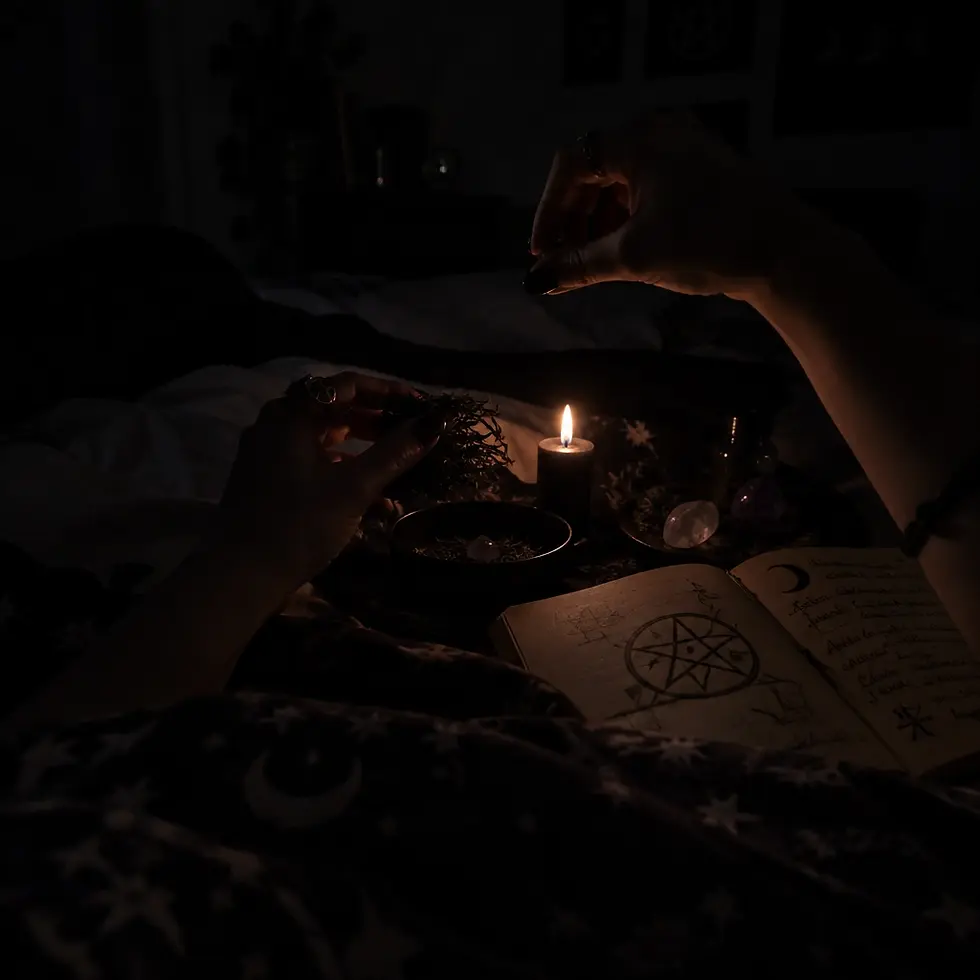
I call myself an interfaith witch doctor, and I write from that spiritual perspective. Witchcraft, as I practice it, gives me ways to mark an ending, prepare for a difficult choice, or pay attention to a feeling I’ve kept busy enough to avoid. I take the ritual seriously. I also take seriously what happens when I clear the table and go back to my day.
What I Ask of a Spell
I begin with a sentence plain enough to say in daylight. “I want to know what I’m willing to offer.” “I want to mourn what ended.” “I want enough steadiness to make the call.” The first sentence I think of is often about somebody else: Make them see what they did. Make them come back. Make them leave me alone. I can hear real pain in those wishes. When I’m honest about the need underneath, I have more choices about what to do with it.
Suppose I’m preparing a spell after a friendship ends. I might set out two slips of paper. On the first I write something I miss, down to the ordinary detail: the way we called each other from the grocery store to ask which peaches looked ripe. On the second I write what I’m relieved to have back: the freedom to make plans without bracing for a last-minute change. I can fold both pieces of paper and keep them in the same drawer. The act gives me a way to let both truths stand. Tomorrow I can decide whether to answer an old message. Tonight I can admit I miss somebody and still feel relieved.
I believe objects can gather meaning through use and attention. Someone else might say the papers give shape to feelings that were hard to hold together. We can sit at the same table. In my own practice, a spell can be a spiritual encounter and still leave me uncertain about what comes next. If I wake up the following day and find that my grief has barely budged, I can take that as information about the depth of the loss. I can give myself breakfast, time, and company. Grief has already asked enough of me without having to perform on cue.
Who Gets to Say Yes?
My personal, current, and future code of ethics asks me to respect clients’ self-determination and to explain services clearly enough for people to make informed choices. In a professional relationship, that includes being clear about the purpose of a service, relevant limits, and the person’s ability to refuse or withdraw consent. The language can sound formal until you picture sitting across from someone who controls access to help you need. A polite invitation from that person can feel like a test.
I integrate my spiritual practice quietly into my counseling techniques. A person may bring up a belief, a ceremony, or a spiritual experience because it matters to them. I can ask, “What does that mean to you?” I can listen when they say a practice helps them grieve, when they say it frightens them, or when they say the people around them have made it hard to decline. Their answer guides the conversation. My own beliefs can stay quietly in the room with me.
Consent also matters around my kitchen table. Before inviting someone into a personal ritual, I’d tell them what I have in mind. Will we sit quietly? Will I ask them to speak? Would they prefer to watch or go home? I want them to know they can change their mind after we begin. There’s a difference between agreeing to light a candle with a friend and discovering halfway through that you’re expected to tell a room full of people why you’re angry with your mother. An invitation is easier to trust when declining it costs nothing.
The same attention to power changes how I think about a boundary spell. If someone keeps calling after I’ve asked for space, I might use the ritual to decide whose calls I want to answer and what I’ll do the next time the phone rings. The practical options depend on the relationship. Muting a friend for the evening and changing how I respond to someone who may retaliate are different decisions. In the second situation, I’d make room for a trusted person to help me think through safety and timing. I don’t owe anyone a dramatic confrontation to prove the ritual meant something.
What the Land Asks of Me
In an educational resource on mālama ʻāina, Kamehameha Schools describes caring for the land as a way of caring for family. Its ʻĀina Ulu program gives that relationship practical form through partnerships with community organizations that care for land and teach through place. I read these materials as teachings from a Native Hawaiian institution with its own commitments to land and community. They lead me to ask what my attention to a place amounts to after I leave it.
Say I feel drawn to a stretch of shoreline and want to mark a change in my life there. I can learn who cares for that place and what they ask of visitors. I can leave stones and shells where I find them. If I want to give something back, I can look for a public workday or support a group already caring for the area. If the place has access restrictions or the people responsible for it ask visitors to keep away, I can honor that request and choose another setting. My sense of connection is one part of a relationship that includes other people’s knowledge and responsibilities.
Interfaith practice, for me, includes knowing when to be a guest. If a teacher shares something publicly, I pay attention to what they have chosen to share, with whom, and for what purpose. An explanation may be offered so that visitors can understand a custom and behave respectfully. That purpose can be fulfilled without turning the custom into something to perform. I can leave a teaching where I encountered it, credit the person or community who shared it, and let it change my behavior in ways they actually asked for.
There’s plenty of material for my own spells in ordinary things I already live with. I can use the key from my pocket, a chipped bowl, a length of thread, or a note written on the back of an envelope. The key matters because I know the weight of it and the door it fits. If I want my practice to express care for a place, I can choose a task that the people tending it have identified as useful. I can return on a day when I have nothing special to ask of the land.
When I Put the Tools Away
The ritual itself can be the easiest part. At my table, I can arrange the objects, speak at my own pace, and stop when the room is quiet. An overdue bill comes with numbers I may be afraid to read. A difficult conversation comes with another person’s answer. I understand the urge to do one more spell before opening the envelope. When I notice that urge, I ask what would count as enough preparation. If I can’t name a stopping point, I may be asking the ritual to spare me the uncertainty of acting.
Sometimes I discover that the obstacle is practical. I can open the bill and still lack the money. I can tell someone I need rest and still have no one to cover my shift. As a spiritual counselor, I want to make room for the anger and exhaustion that come from having too few real choices. If I’m broke, the useful follow-up to a ritual might be sitting with a friend while I make a call about payment options. If I’m exhausted, I might ask somebody to handle one errand. I can be specific about the help I need, and I can be honest if it’s unavailable.
I also pay attention to what the practice is doing to my days. If I keep repeating a ritual because I feel afraid to stop, lose sleep looking for signs, or put off getting care because I think I must settle the matter spiritually first, I take a break and reach out. Worsening distress, changes in sleep, or difficulty managing daily tasks are reasons to talk with a health care provider or mental health professional. I can describe the experience in my own words and explain what has changed. “This practice matters to me, and lately I’ve been staying up half the night doing it” gives us somewhere to begin.
I make the same distinction when an ordinary event feels charged with meaning. If the wind lifts the edge of a page just as I’m about to speak, I may take the timing to heart. I can sit with what it brought up and see how I feel about it later. If my next choice involves my health, my housing, or somebody else’s safety, I gather the information that choice calls for. I can keep the moment at the table as part of the story without asking it to carry the whole decision.
The Next Morning
If you want to try a small spell, start with one situation you can describe in a sentence and an object whose meaning you already know. A key might stand for privacy. A cup might stand for being cared for. The object can be as plain as the one you reach for every morning. Set it on the table and give yourself a few minutes to write.
Name the need. “I need a quiet evening.” “I need help opening this letter.” “I need somewhere to put my grief for a while.” Write it on a slip of paper.
Choose one action you can take. Decide when you’ll take it and whether you want someone with you. If the stakes are high, the first action might be asking for help before deciding what else to do.
Give the ritual an ending. Read your sentence aloud if you want to. Put the object back in its ordinary place. Burn, rip, flush or carry in a mojo bag the slip of paper. When the time you chose comes around, take the action or write down what got in the way.
I like the third step because I can learn from either outcome. Maybe I finally send the message. Maybe I stare at it again and realize that what I’m afraid of is losing the only person who can pick up my child on Thursdays. That changes the question. Before I send anything, I can see who else might be able to help. The pause gave me enough room to be specific about what was at stake.
The next morning, the key is back by the door. I may still have a favor to decline, a letter to open, or an evening to grieve. If I’ve spent a few quiet minutes with the thing I was afraid to say, I can carry those words into a conversation at an hour when someone is awake to hear them. I can ask for the evening I need. I can also ask if they have time to sit with me while I send the message.



Comments